Want to be in the loop?
subscribe to
our notification
Business News
CHALLENGES FOR VIETNAM LOGISTICS MARKET IN 2016
Julien Brun, General Manager of CEL Consulting, said the current logistics market is highly fragmented. Thousands of logistics services companies are now currently providing only a few simple logistics operations and cannot generate added value for logistics chains. A supply chain is made effective or ineffective depending on connections of different points and operations on strings, and also depends heavily on interface.
He cited that in ice cream chain in Vietnam, shipping companies only care about how to keep their vehicles refrigerated en route, cold storage companies only care about products inside their facilities, and none is responsible for keeping it cold when it is conveyed from cold storage facilities to vehicles or from vehicles to cold storage facilities. As a result, product quality is affected.
In major cities like HCM City, logistics challenges come from more and more products on the market, more and more points of sale and distribution agents in operation, smaller and smaller order values, and more and more vehicles of various scales in operation. Major challenges of current logistics operations are traffic congestions.
Two vital factors for good governance in any particular logistics are the storage of goods and the circulation of goods. Three top criteria in logistics management in general are rapid speed, guaranteed trust and low cost. Thus, to facilitate logistics development in Vietnam, it is necessary to develop core elements to succeed in both hardware and software.
Core elements for hardware success are logistics infrastructure, including developing and consolidating port system capacity to receive bigger ships and handling and transporting equipment at ports. Other tasks include expanding the capacity of ports and enhancing the effectiveness of port operations.
Core elements for software success comprise clear and rapid clearance. Singapore is a leading port operator with a lot of effective operation and clearance processes for us to learn.
In addition, exporters should also create added values for their products rather than sell raw materials or simply processed products as now. Then, logistics will add values to imports and exports.
In the coming time, logistics needs to ensure conditions and product quality from factory to end-consumers. Future logistics must certainly increase visibility into the status of goods in real time (anytime, anywhere) by using big data and real-time tracking applications. Packaging will also need innovative solutions to protect goods during the time of logistics operations.
In the coming time, the market will witness many logistics solutions and apply new technologies like crowd-sourcing to synthesise small resources together to provide solutions to one kind of work. Crowd-sourcing logistics will probably change the picture logistics elements in the coming time.
Finally, to develop logistics in the future, business leaders need strategic visions and cooperate with partners in the entire logistics value chain to achieve a greater benefit and value.
Source: VCCI
Related News
MEMBER CORNER / PROMOTIONS
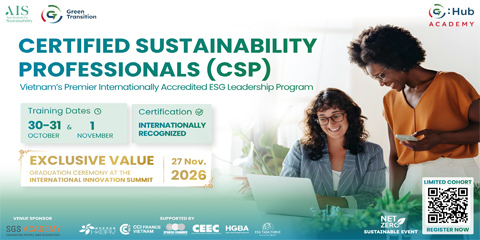
HCMC | CERTIFIED SUSTAINABILITY PROFESSIONAL (CSP) TRAINING | REGISTRATION OPEN
As sustainability becomes deeply embedded in corporate strategy and supply-chain operations across Vietnam, Hong Kong Business Association Vietnam is pleased to endorse the upcoming Certified Sustainability Professional (CSP) training program by the Asia Institute for Sustainability (AIS) - a premier internationally recognized ESG credential in Vietnam.
VIETNAM ECONOMY INVESTMENT
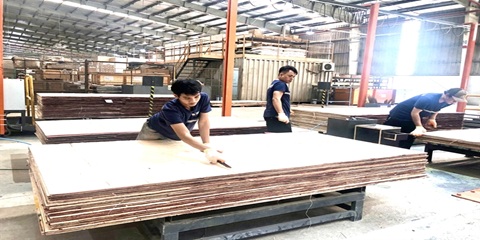
HCM CITY SAYS HOW IT PLANS TO ACHIEVE 10-11% ANNUAL EXPORT GROWTH FOR REST OF DECADE
The southern economic hub aims to strengthen its role as the country’s largest import-export centre while developing into a regional transhipment centre in Southeast Asia, supported by green and digital transformation and a circular economy. HCM City has outlined measures to expand production capacity, cut logistics costs, diversify export markets, and help businesses meet increasingly stringent international standards as it targets average annual export growth of 10-11 per cent through 2030.
VIETNAM ECONOMY INVESTMENT
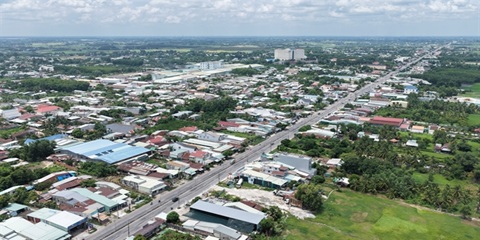
HCM CITY LEADS ECONOMIC RESTRUCTURING IN SOUTHEAST REGION
According to Associate Professor, Dr Vũ Tuấn Hưng, director of the Institute of Social Sciences of the Southern Region, the Southeast is a strategically important socio-economic space in Việt Nam’s development given its advantages in location, industry, trade, services, logistics, science and technology, urbanisation and human resources.
TECHNOLOGY
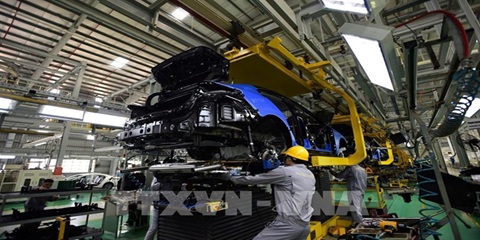
DIGITAL TRANSFORMATION TURNED INTO PRACTICAL TOOLS FOR PEOPLE, BUSINESSES
Việt Nam is moving its digital transformation agenda beyond policy frameworks and individual technology platforms towards practical applications that address everyday needs, as authorities seek measurable outcomes from science, technology and innovation. Under Politburo Resolution No. 57-NQ/TW issued on December 22, 2024, the implementation is increasingly shifting from simply completing assigned tasks towards developing concrete products and services for citizens and businesses.
TECHNOLOGY
APPLYING TECHNOLOGY FOR ECONOMIC TRANSFORMATION
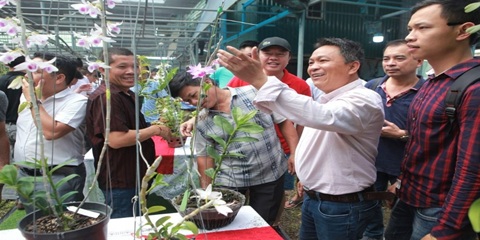
Having completed its new rural development program, Hanoi is shifting its focus toward improving development quality and building smart, sustainable rural areas. The transformation of Dong La orchid-growing village in An Khanh, a western commune of Hanoi, shows how digital technology is becoming a driver of production, market expansion, and higher incomes for local residents.

MEMBER CORNER / PROMOTIONS
VIGLACERA HONORED AS THE "LEADING GREEN INDUSTRIAL REAL ESTATE DEVELOPER 2026"
Organized by the Vietnam Investment Review, this prestigious awards program recognizes industry pioneers advancing eco-industrial parks, clean energy transition, and rigorous ESG standards. Outperforming competitors through a rigorous evaluation, Viglacera Corporation – JSC proudly ranked among the Top 5 highest-positioned enterprises in the Leading Green Industrial Real Estate Developers 2026 category, reinforcing its premier position in Vietnam’s industrial real estate sector.
Events Sponsors






















